The Psychology of Talking to Strangers Online
It's a strange little moment when it happens: you're ten minutes into a chat with a total stranger — no name, no face, no history — and you catch yourself typing something you've never said out loud to your closest friend. A worry about your job. A thing you regret. And instead of feeling reckless, it feels like exhaling.
If that's ever happened to you, you're not odd. Psychologists have documented exactly this pattern for half a century — first on trains and in airport lounges, later in chat rooms and anonymous apps. Opening up to someone you'll never meet again isn't a glitch in human behaviour; it's one of its most reliable features. Here's what the research actually says.
The "stranger on a train" effect
In the 1970s, psychologist Zick Rubin studied self-disclosure — how and when people reveal personal information to each other. One of the recurring findings from that era of research was a pattern so familiar it earned a nickname: the stranger on a train phenomenon. People will sometimes tell a seatmate they've known for twenty minutes things they've hidden from family for years.
We sometimes confide in strangers precisely because we'll never see them again — the confession leaves the train when they do.
the "stranger on a train" effect, described by psychologist Zick Rubin
The logic holds up when you unpack it. Disclosure to people in our lives carries consequences: what you tell a friend today shapes how they see you tomorrow, and can travel through your social circle. A stranger carries none of that weight — no prior picture of you to contradict, no mutual friends to tell, no tomorrow in which to bring it up. The relationship has no future, and paradoxically that's what makes the present moment of it so honest.
Research on self-disclosure also highlighted reciprocity: disclosure invites disclosure. When one person shares something real, the other tends to match it. On a train that produces those oddly deep conversations between seatmates; in an anonymous chat window it can happen even faster, because the usual reasons to hold back are gone from the start.
Anonymity and the online disinhibition effect
In 2004, psychologist John Suler published a paper that became the standard reference for why people behave differently online: the online disinhibition effect. Suler identified several factors that loosen our usual social brakes, and three of them map almost perfectly onto anonymous text chat:
- Dissociative anonymity. When nobody knows who you are, what you say can't be pinned to your everyday identity. "They don't know me" quietly becomes "this can't follow me," and guardedness drops.
- Invisibility. Nobody sees your face — and you don't see theirs. No managing your expression, no watching for a raised eyebrow. For many people that removes the biggest barrier to saying hard things.
- Asynchronicity. Even in a live chat, you control the tempo: pause, reread, choose your words. Suler noted that not facing someone's immediate reaction makes deeper disclosure easier.
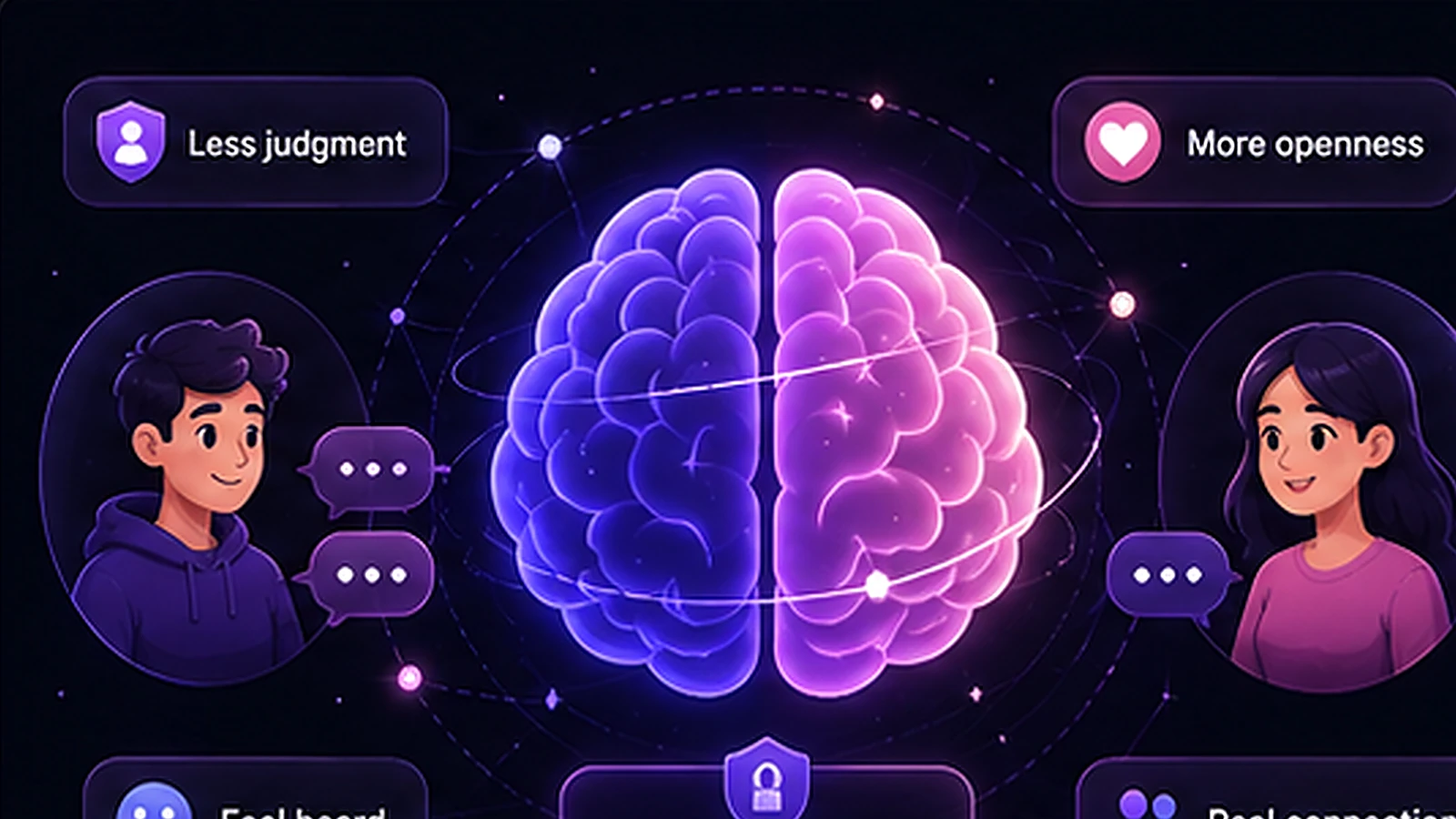
Suler was careful about something that often gets lost when his paper is quoted: disinhibition cuts both ways. He called the good side benign disinhibition — people sharing hidden emotions and fears, showing unusual kindness to strangers. The bad side he called toxic disinhibition — rudeness, harassment and cruelty from people who feel equally unaccountable. The same anonymity powers both; which one you get depends on the environment. More on that below.
We're bad at predicting how these chats will feel
Here's the twist: even though talking to strangers reliably feels good, almost everyone expects it to feel bad. Behavioural scientists Nicholas Epley and Juliana Schroeder demonstrated this in a now-famous series of experiments with commuters on trains and buses in Chicago. They asked some people to strike up a conversation with a stranger during their commute, others to sit in solitude, and others to do whatever they normally did.
Before the ride, participants predicted the conversation condition would be the least pleasant — most assumed the stranger wouldn't want to talk. Afterwards, the results flipped: the people who talked to a stranger reported more positive commutes than the ones who sat in silence, and essentially nobody was rebuffed.
They traced the mistake to a simple miscalibration: we assume other people are less interested in connecting than they actually are, so we pre-emptively stay silent — and everyone sits in a quiet carriage full of people who would each have enjoyed a conversation. Anonymous chat platforms are a workaround for that miscalibration: everyone in the matching queue has already answered the scary question. Yes, they want to talk.
Test the research yourself
The commuters expected awkward silence and got a good conversation. One tap puts you in a chat with someone who already said yes to talking.
A pressure valve for loneliness
None of this means a stranger chat replaces deep friendship — it doesn't. But research on weak ties suggests that small, low-stakes social contact matters more than we give it credit for. Psychologists Gillian Sandstrom and Elizabeth Dunn found that even minimal interactions — a genuine exchange with a barista, a brief chat with an acquaintance — measurably boost mood and feelings of belonging, and that people with more of these small interactions in their day tend to be happier.
That's the niche anonymous chat fills: social contact with the cost stripped out. No scheduling, no obligation, no performance, no aftermath. For someone in a lonely stretch — new city, night shift, everyone asleep at 3am — a ten-minute chat with a stranger isn't a substitute for friends. It's a pressure valve: proof, right now, that there's another human on the other end who's listening. Loneliness bites hardest at exactly the hours when your own social circle is unreachable, and a global chat queue doesn't keep office hours.
When anonymity helps — and when it doesn't
It would be dishonest to end the story at "anonymity is liberating." The same research that explains the warmth of stranger conversations also explains why unmoderated anonymous spaces sour so quickly: anonymity lowers the barrier to honesty and to cruelty by exactly the same mechanism.
This is why the research findings and the horror stories can both be true. The psychology sets up the possibility of a genuinely good conversation; the platform's design decides how often you actually get one.
How to get the good version of stranger talk
The studies point to some practical habits that tilt anonymous conversations toward the benign side:
- Lead with curiosity, not performance. Epley and Schroeder's commuters succeeded by simply being interested. Ask a real question and listen to the answer.
- Reciprocate disclosure gradually. Match the other person's depth rather than dumping everything at once — let the conversation earn its way deeper.
- Give a chat a fair minute. First messages predict little; the third or fourth exchange tells you much more.
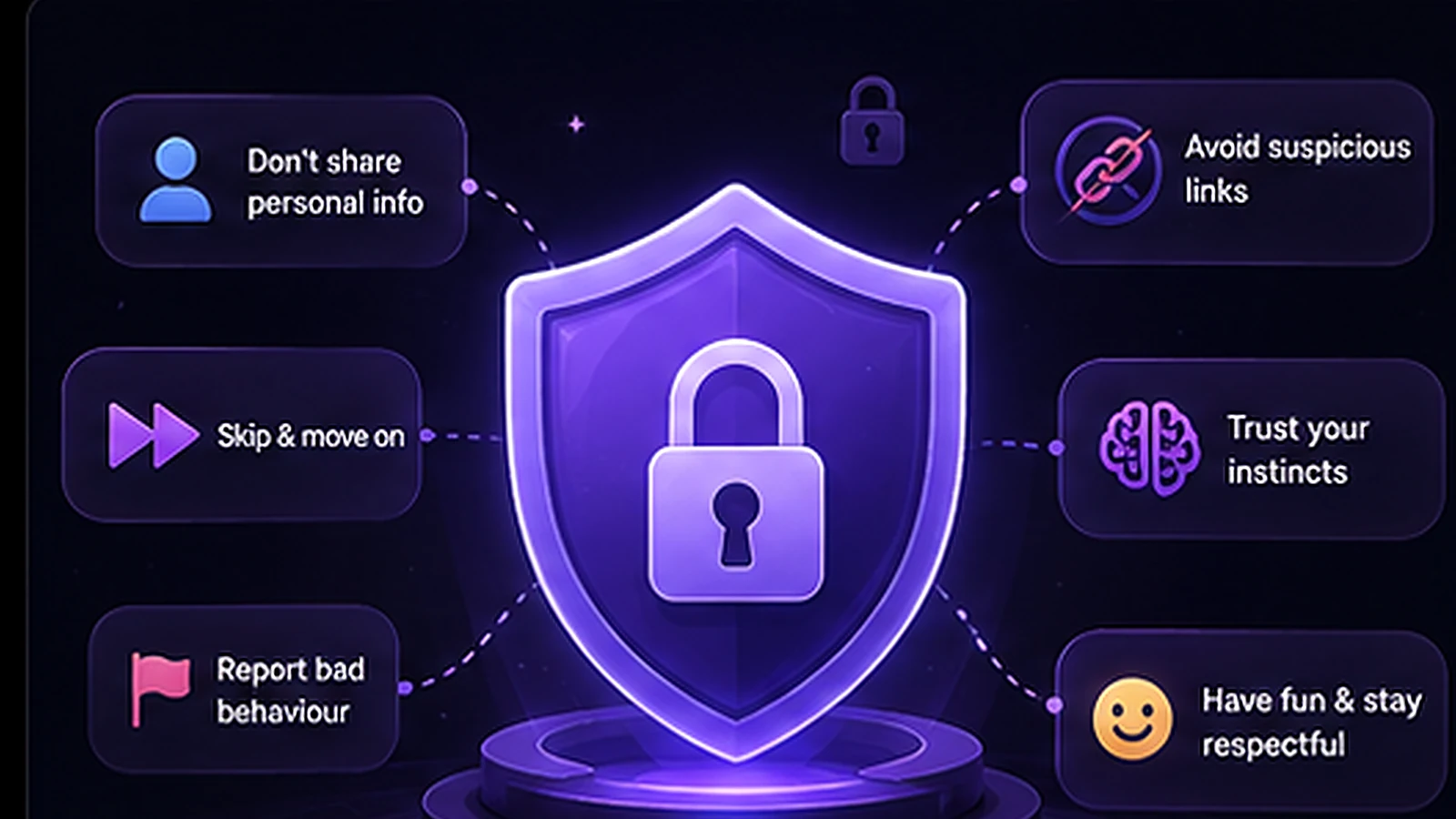
- Leave chats that turn sour — immediately. Don't argue with toxic disinhibition or feed it. Skip and move on.
- Keep identifying details out of it. The freedom comes from anonymity, and it only works if you maintain it on your side — our safety guide has the full checklist.
- Not sure what to say first? Openers matter less than you think, but a good one helps — see our conversation starters guide.
Half a century of research converges on a comforting conclusion: humans are built to connect with strangers, we systematically underestimate how well it will go, and given a little anonymity and a safe exit, we mostly use the freedom to be more honest — not worse. The stranger on the train never went away. These days, they're just a chat window.
Common questions about the psychology of stranger chat
Why is it easier to open up to a stranger than a friend?
Because disclosure to a stranger has no consequences for your existing life. A friend remembers what you say, and it can change how they see you or travel through your social circle. A stranger you'll never meet again carries none of that — psychologists have called this the "stranger on a train" effect since the 1970s.
Is talking to strangers online actually good for you?
Small doses of low-stakes social contact reliably boost mood — that's the core of the weak-ties research by Sandstrom and Dunn, and Epley and Schroeder showed people enjoy stranger conversations far more than they expect to. It's no replacement for close relationships, but as a supplement the evidence is genuinely positive.
Does anonymous chat make people meaner?
It can, but it's not automatic. Suler's online disinhibition effect works in both directions: anonymity makes some people more hostile (toxic disinhibition) and others more open and kind (benign disinhibition). Which side dominates depends on the environment — moderation, norms, and how easy it is to leave a bad conversation.
Why do I tell strangers things at 3am that I'd never say in daylight?
Several effects stack at night: loneliness peaks when your own circle is asleep, invisibility and anonymity lower your guard, and the slower written pace of text chat makes reflection easier. That combination is close to a textbook setup for deep self-disclosure.